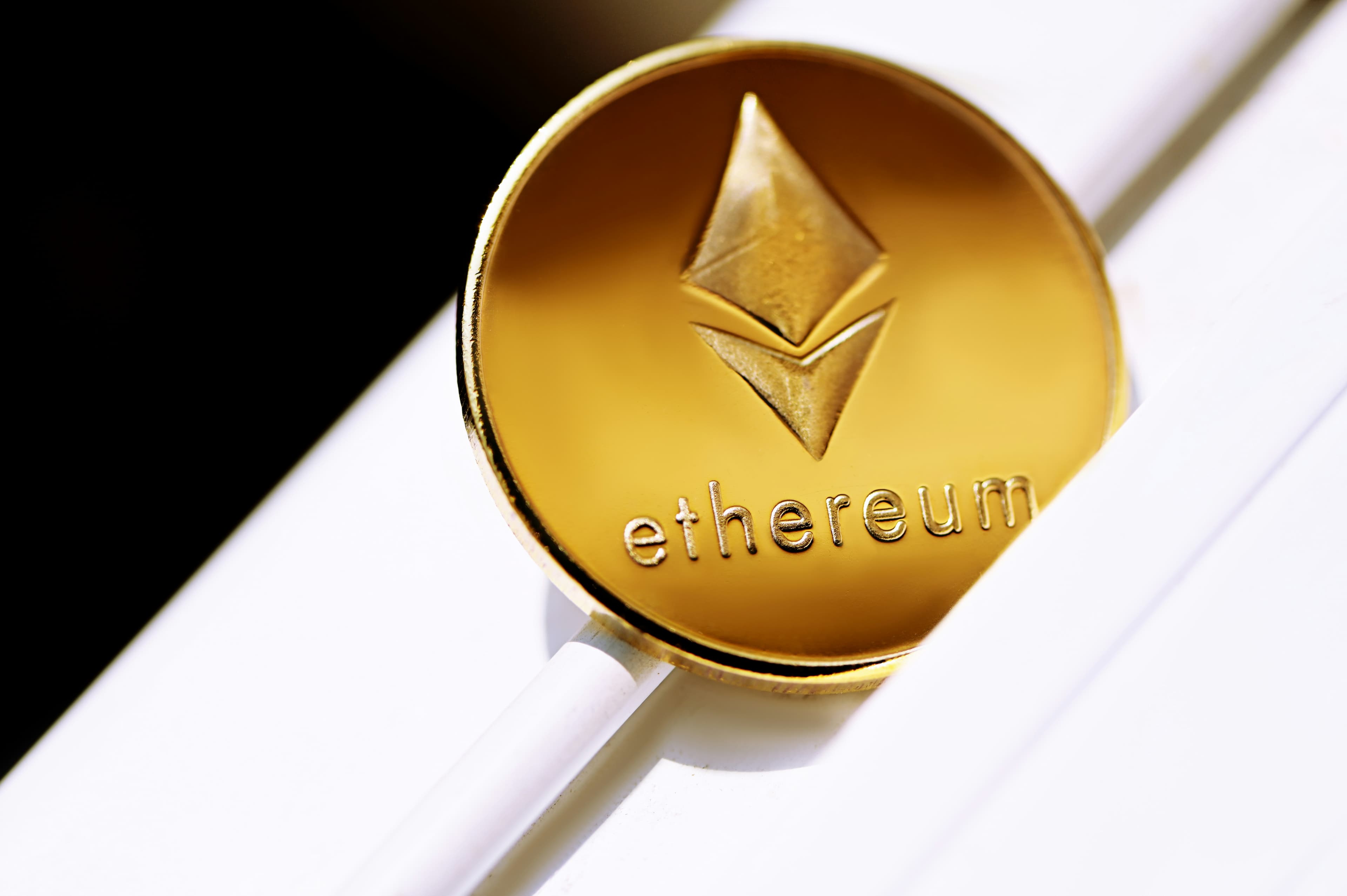
Can You Buy Shipping Labels with Ethereum?
Can you buy shipping labels with Ethereum? Yes, you can pay with Ethereum to generate shipping labels for select carriers. ETH is the second most widely held cryptocurrency after Bitcoin, primarily because it pioneered the use of smart contracts in blockchain networks and set a new standard of security for other crypto.
It’s important to note that you cannot buy postage with Ethereum directly from the carriers themselves. And while ETH is widely used, not all crypto postage providers accept it as payment for shipping labels. Many crypto users who hold ETH as their primary asset may be wondering, “Where can I pay with Ethereum?” The answer is USPostage.io.
Like most third-party platforms that accept crypto for postage, USPostage.io offers shipping labels for USPS, FedEx, UPS, DHL, and Canada Post. Unlike most of these intermediaries, however, USPostage offers Ethereum payment shipping options.
Shipping labels are, in fact, a practical real-world use case for ETH and we’ll dive deeper into the whys in this article.
Why Use Ethereum for Postage?
Why should you use Ethereum for postage? When you pay with Ethereum to generate shipping labels, you leverage all the benefits of decentralized technology, including enhanced security, speed, and transparency. Knowing how to pay with Ethereum also gives users ETH-specific advantages:
ETH is a widely held crypto. ETH consistently ranks second in market dominance, after BTC. Many users hold ETH from NFT purchases, for DeFi, or general investing, which encourages more businesses worldwide to accept ETH payments. ETH postage is a practical use-case in the crypto's growing list of applications.
A strong ecosystem. The ETH ecosystem is generally considered the most developed and diverse within the fast evolving blockchain landscape. It is the primary hub for DeFi, has a massive and active developer community, and boasts of a thriving Layer 2 (L2) scaling that facilitates the processing of thousands of transactions per second (TPS) at much lower rates. This robust ecosystem makes Ethereum shipping labels a practical solution for everyday shipping needs.
Smart contract capabilities. ETH pioneered the functional application of smart contracts within the blockchain space. Beyond just recording transactions in a digital ledger, smart contracts on a blockchain automate logistics (real-time tracking, automated compliance actions), payments (payment release), and documentation (bills of lading, customs declarations, etc.). Smart contracts ensure data integrity, minimize data breaches, and reinforce trust across the supply chain.
Programmable payments. Through smart contracts, ETH was the first major platform to support full payment programmability. These self-executing contracts automate conditional financial transactions and reduce the need for intermediaries, thereby reducing administrative overhead and lowering costs. The application of ETH in shipping improves transparency with its immutable ledger, which significantly reduces disputes.
Instant cross-border settlement. Using an Ethereum payment shipping solution ensures real-time transaction settlement, 24/7. This helps make cross-border trade faster and cheaper compared to bank-based transactions, which can be particularly beneficial for bulk shipping and luxury goods tracking.
When you pay with Ethereum, it’s just as important to be aware of the crypto’s pitfalls. The most noteworthy is ETH’s gas fees (transaction costs), which is often higher than other cryptos, especially when the network has high traffic.
In fact, ETH fees can exceed $20 during peak congestion, making ETH postage impractical for small-value items. The high demand for the crypto's limited block space contributes to its volatile gas fees. Because Ethereum prioritizes security and decentralization, transactions are also often slower.
How To Buy Postage With Ethereum
Here’s a step-by-step guide on how to pay with Ethereum on USPostage.io:
Ensure you have ETH in your wallet. If you don't have one yet, set up your wallet via MetaMask, Coinbase Wallet, or Trust Wallet to generate an Ethereum address. Open your wallet app, click "Receive" or "Deposit," and select ETH to display your unique wallet address. Copy the address and buy/transfer ETH via your preferred exchange, such as Coinbase. Your wallet may also let you purchase ETH directly using fiat currency via debit card or bank transfer.
Go to USPostage.io. Select your preferred carrier: USPS, FedEx, or UPS. Next, select your package type, and then enter the shipping details.
Select your desired shipping option. The platform will display the carrier's available shipping options for your package type, as well as the delivery time and price for each in USD.
Select Ethereum as your payment method. The platform will convert the shipping rate from USD to its equivalent value in ETH. It will also generate a QR code you'll need to scan and a wallet address you'll use to pay with Ethereum.
Review the ETH amount displayed. This is calculated at the current exchange rate. You will have 60 minutes to scan the QR code and lock in the current exchange rate for your ETH postage.
Send the exact ETH amount to the wallet address shown or scan the QR code. Use the copy-paste function if you're paying via the wallet address to make sure you input it correctly (using an incorrect address will result in the permanent loss of the transferred funds). The safest option is to scan the QR code. Take note that if your wallet charges a fee, you'll need to add it to your payment.
Wait for transaction confirmation. This usually takes 1-5 minutes, depending on network traffic. Do not refresh or navigate away from the page until your payment is confirmed.
Download and print your label. Save your transaction ID and tracking number.
Take note of these best practices when you pay with Ethereum:
Use trackers like Etherscan Gas Tracker or Ethereum Gas Station to check current gas prices.
Transact during off-peak times for lower gas fees.
You can balance the speed and cost of a transaction by setting appropriate ETH gas fees via your wallet's "Advanced Gas Options" or "Edit" under the gas fee section.
If you don't mind paying more to expedite your transaction, set a high Priority Fee (tip to miners) for faster processing.
If speed is not a priority, set a lower tip/Priority Fee to save on costs.
ETH vs. Other Cryptos for Shipping Labels
Are Ethereum payment shipping solutions the best option when using crypto for postage? The best option depends on what crypto you already hold and how much you care about speed, fees, and price stability.
It may also be helpful to check how ETH stacks against other cryptocurrencies. Below is a quick comparison of ETH vs BTC, LTC, and USDC:
Crypto | Speed | Fees | Price Stability | Best For |
ETH | 1-5 minutes | Volatile | Volatile | Convenience, if you’re already holding ETH |
BTC | 10 minutes ave.; may be as long as 30-60 minutes | Moderately variable | Volatile | Universally accepted |
LTC | 2.5 minutes | Predictable | Volatile | Small, everyday payments |
USDC (On Ethereum) | Seconds - minutes | Same as ETH | Stable; pegged to USD | Predictable pricing |
Here's a rundown of how different cryptocurrencies fare when used for shipping:
ETH offers a nice balance between cost and speed compared to BTC. Transaction confirmation is much faster (1-5 minutes vs 10 minutes); however, gas fees often fluctuate depending on network congestion. ETH also has the highest average gas fees among other cryptos because it prioritizes security and decentralization. Not all third-party crypto postage platforms accept ETH; but you can buy ETH shipping labels on USPostage.io.
BTC is the most widely accepted but also has the slowest processing times, with an average of 10 minutes and up to 30-60 minutes with multiple confirmations. Users can expect relatively predictable fees, but these can also increase during high network demand.
LTC is often the most budget-friendly solution, particularly for small and frequent payments. Block times average 2.5 minutes and fees are consistently low. However, LTC has a slightly lower adoption compared to ETH and BTC.
USDC (on Ethereum network) has the most stable price since its value is pegged to the dollar at a 1:1 ratio. It leverages the Ethereum network's speed, but also comes with the network's higher gas fees.
To sum up:
If you're already holding ETH, use it to purchase shipping labels. If your needs are not urgent, wait for off-peak times to enjoy lower gas fees. It's also a good option if you want faster processing and don't mind paying higher fees.
If you're holding BTC only, the good news is that it works almost everywhere. The bad news is that you should always expect slower confirmations.
LTC is the most cost-efficient option for small-value shipments.
USDC is the safest choice if you're looking for stable pricing.
Gas Fees — What You Need to Know
It's worth repeating that Ethereum gas fees are separate from the cost of ETH postage. While ETH gas fees are often higher compared to other crypto, there are ways that can help minimize them.
Here are practical tips to reduce gas fees:
Send during off-peak hours. Historically, early- morning/late-night hours and weekends typically bring light network traffic/low network demand, which means gas fees are also lower. Time your transactions between the hours of 9 and 11 UTC.
Use gas trackers to check real-time network activity. Gas trackers like Etherscan and Blocknative will help you schedule your transactions when network traffic and gas fees are low.
Use a wallet that lets you set custom gas prices. Wallets like Metamask allow access to native wallet tools ("Advanced" settings) to set custom fees. Keep in mind that setting your gas fee too low may cause transaction delay or failure, so it's important to understand how gas limits work. As much as possible don't go lower than the required gas limit.
Adjust Priority Fees (tips for miners). If network traffic is heavy but your transaction is not urgent, set your Priority Fee lower than the default recommendation (if your wallet allows you to use "Advanced" gas settings).
Consider batch operations. Take note that a $10 shipping label might have a gas fee of $1-$5, depending on network conditions. Choose a platform that allow you to transact in bulk to save on base fees.
Ethereum Shipping Labels FAQ
Let’s answer some frequently asked questions to sum up everything you need to know about Ethereum payment shipping options.
Where can I pay with Ethereum for shipping?
Major carriers currently do not accept Ethereum or other crypto as payment for their services. You’ll have to use a third-party crypto postage service that accepts ETH. Not many of these intermediaries accept ETH payments. Fortunately, USPostage.io offers Ethereum shipping labels as one of its many options.
What network does USPostage.io use for ETH? (Mainnet)
The platform uses a mainnet (main network) for all cryptocurrency transactions, operating on its own protocol, network, and consensus mechanism.
Can I use ETH on Layer 2?
You can use ETH on L2 networks for significantly cheaper and faster transactions compared to ETH mainnet. However, you'll have to use a "bridge" to move ETH from the L1 to L2 network. This involves choosing an L2 (Arbitrum One, Base, or Optimism) and connecting it to your wallet. Take note that while L2 transactions are cheap, the initial move from L1 to L2 involves regular ETH fees.
Are the labels different from ones bought with USD?
No. ETH shipping labels are identical to the labels you can purchase directly from the carrier. These are legitimate shipping labels that are recognized and accepted by their carrier and which come with tracking numbers you can use on the carrier’s website.
Can I use wrapped ETH or ERC-20 tokens?
Yes, but only for USDC. For others, please contact USPostage.io support.